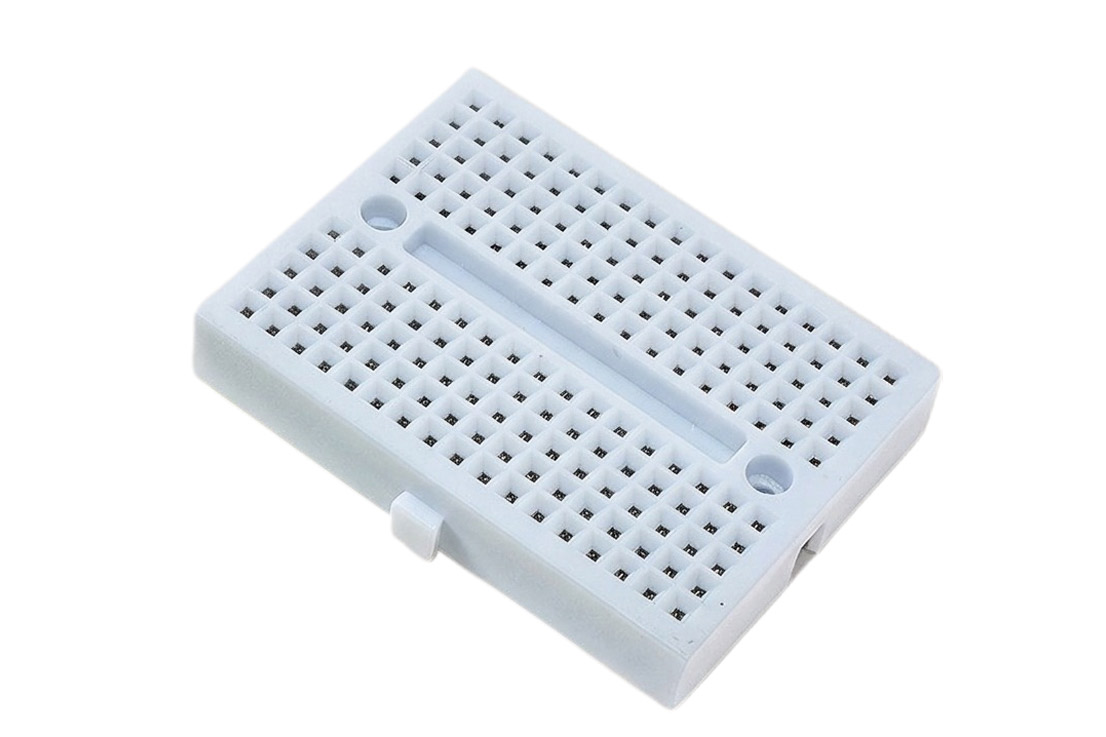
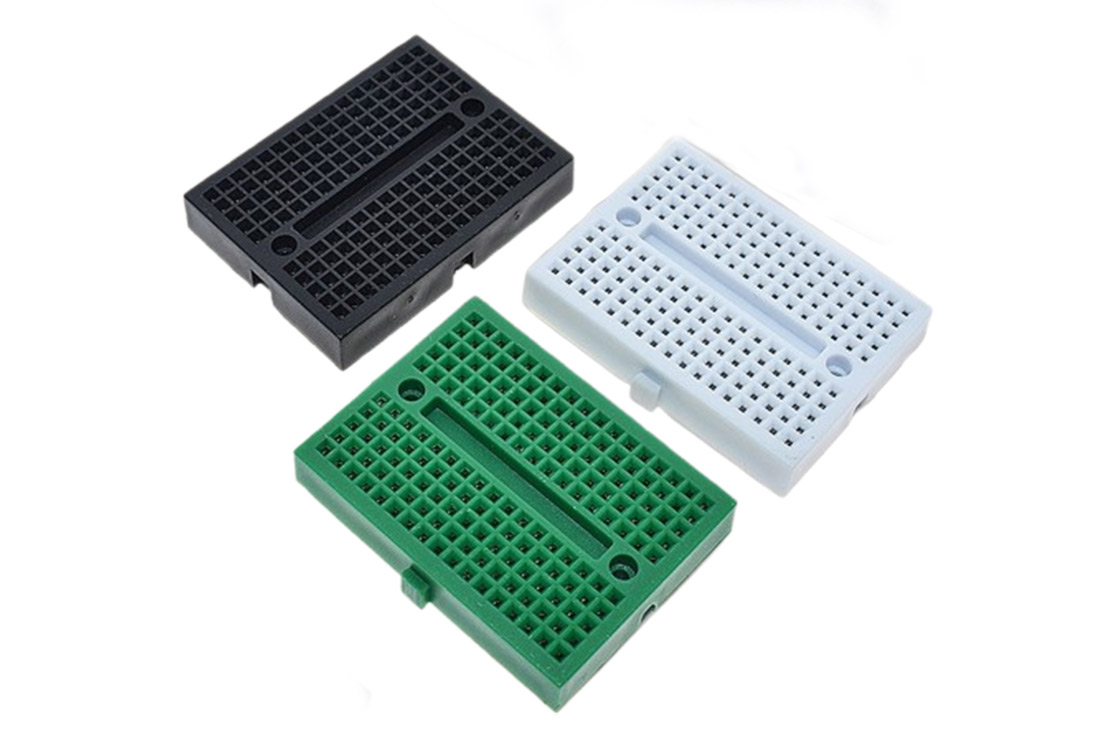
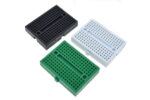
BREAD BOARD WHITE 35MMX47MM
R11.00
50 in stock
| Weight | 0.052 kg |
|---|---|
| Dimensions | 5.5 × 5.5 × 3 cm |
Description
Product Specifications
-
Dimensions: 35mm x 47mm (Mini Breadboard)
-
Total Points: 170 tie-points (arranged in two columns of 17 lanes)
-
Material: White ABS plastic body with internal nickel-plated phosphor bronze spring clips
-
Backing: Self-adhesive foam tape for easy mounting to surfaces or robot chassis
-
Compatibility: Standard 2.54mm (0.1″) pitch; works with jumper wires and DIP-package ICs
What It Is Used For
The primary purpose of a breadboard is to create temporary electrical connections so you can test your circuit ideas before committing them to a permanent PCB (Printed Circuit Board).
-
Rapid Prototyping: Quickly plug in LEDs, resistors, transistors, and sensors to see if your design works.
-
Educational Tool: Perfect for learning basic electronics or physics experiments because it requires no heat or dangerous tools.
-
Microcontroller Projects: Perfectly sized for small boards like the Arduino Nano, Adafruit Trinket, or ESP8266, allowing you to break out pins for external components.
-
Modular Design: Many of these boards feature “tongue and groove” sides, allowing you to snap multiple boards together if your project grows.
Essential Beginner Component List
If you are just starting out, these parts are the “bread and butter” of prototyping:
-
Jumper Wires: M-M (Male-to-Male) wires to connect the points on the board.
-
LEDs: Standard 5mm LEDs (Red, Green, Blue) to provide visual feedback.
-
Resistors: Specifically 220Ω or 330Ω to protect your LEDs from burning out.
-
Push Buttons: Simple tactile switches for user input.
-
Power Source: A 9V battery with a clip or a 5V breadboard power module.
Related Products
P.V.C INSULATION TAPE 10Y
In stock